EPC C by 2030: The Real Upgrade Cost Breakdown Landlords Need to See

All privately rented properties in England must meet a minimum energy efficiency rating of C by 2030. Here's how to comply

EPC certificate

Table of contents

From 2030, all privately rented properties in England are expected to require a minimum EPC rating of C. Properties that cannot meet this standard will not legally be able to be let. For landlords with D or E-rated stock — which represents a significant proportion of the UK’s private rented sector — this creates a decision point: upgrade and continue letting, or sell while the market for such properties still exists.

This article sets out the realistic upgrade costs by current rating and property type, compares them against the cost of a clean sale, and provides a framework for making that decision.

Cost estimates in this article are based on industry averages as of early 2026. Actual costs vary significantly by property type, size, and current energy performance rating. Always obtain independent quotes from accredited contractors.
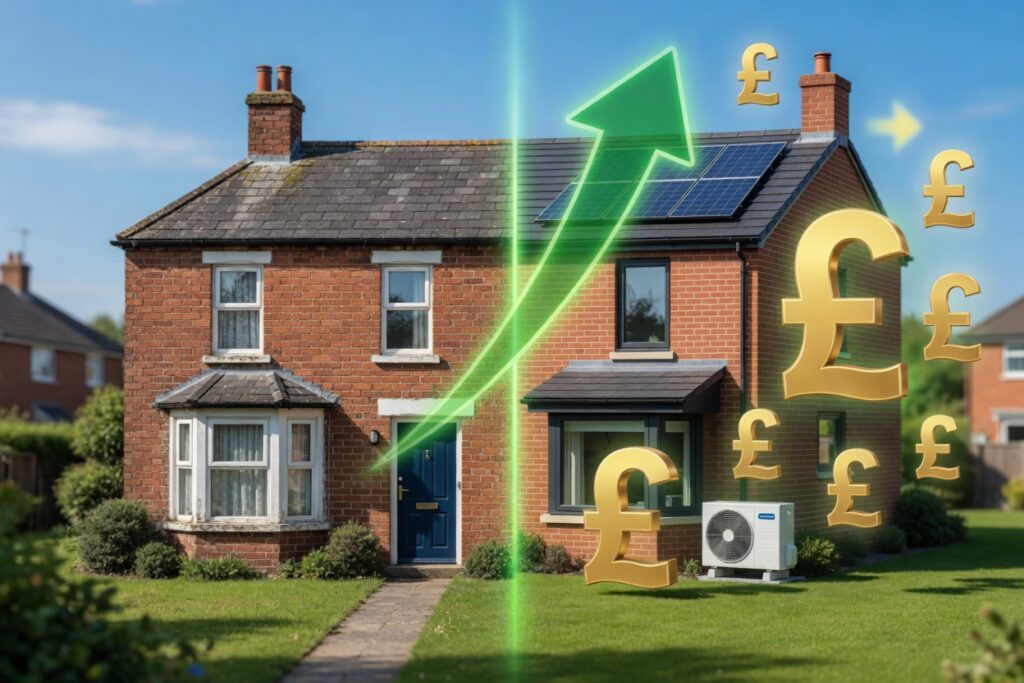

What Is the EPC C Minimum Standard?

An Energy Performance Certificate (EPC) rates a property’s energy efficiency on a scale from A (most efficient) to G (least efficient). The government’s proposed minimum standard for the private rented sector from 2030 is a C rating.

Properties currently rated D, E, F, or G will not comply. Landlords with non-compliant properties will face a choice: fund the upgrades needed to reach a C, or exit the market before 2030.

The current minimum for existing tenancies is E — a standard introduced in 2018 under the Minimum Energy Efficiency Standards (MEES) regulations. The proposed upgrade to C represents a significant step change.

How Many Properties Will Be Affected?

According to the latest data from the English Housing Survey and EPC register data, 51% of the private rented housing stock is currently rated A to C, up from 25% ten years ago. However, that still means that almost half of rental properties need to be upgraded – about 2.7 million homes.

There is significant variation across the country, largely caused by variations in property age and type. London has the most energy-efficient rental properties on average, with 65% meeting the C grade, while in the East Midlands only around a third of homes make the grade.

The scale of the upgrade programme required to bring the entire PRS to EPC C by 2030 is substantial. Industry estimates suggest that the average cost of upgrading a D-rated property to C is in the range of £10,000–£15,000. For E-rated properties, the typical range is £15,000–£25,000. F and G-rated properties can require investment of £25,000–£40,000 or more.

The Upgrade Cost Breakdown

Current Rating Typical Upgrade Cost Common Measures Required Upgrade to C Feasible?
D £10,000–£15,000 Loft insulation, improved heating controls, LED lighting, secondary glazing Yes (straightforward in most cases)
E £15,000–£25,000 Wall insulation (cavity or solid), new boiler / heat pump, double glazing Yes (more complex, higher cost)
F £25,000–£35,000 Full fabric upgrade, new heating system, possible extension of electrical systems Sometimes (depends on construction type)
G £35,000+ Comprehensive retrofit across fabric, heating, ventilation, and glazing Not always achievable to C cost-effectively

Sell or Upgrade?

For many landlords, the decision is not simply “how much will the upgrade cost?” but “is the upgrade worth making given the likely return?”

Consider a landlord with a D-rated property valued at £220,000 and generating £12,000 gross annual rent:

  • • Upgrade cost to reach EPC C: approximately £12,500
  • • Increase in rental value following upgrade: typically £500–£1,500 per annum for a D-to-C improvement
  • • Payback period on upgrade (rental uplift alone): 8–12 years
  • • Impact on capital value: modest — EPC C may improve saleability but not necessarily price materially

Against this, consider a tenanted sale through LP Exchange:

  • • No upgrade cost prior to sale
  • • No disruption to tenancy or tenant relationship
  • • No Ground 1A notice period or re-letting embargo
  • • Proceeds available for reinvestment in a more financially efficient structure

For landlords who are already ambivalent about a property — due to Section 24, net yield, or portfolio rationalisation — the EPC upgrade requirement can serve as the prompt to act. The calculation changes materially once a £15,000-£25,000 capital commitment is factored into the hold decision.

Why 2026 is Decision Year

With four years until the 2030 deadline, many landlords assume they have time. The practical picture is different:

  • • Accredited retrofit contractors are already reporting extended lead times in many regions. Demand for insulation, heat pump installation, and glazing upgrades is rising faster than contractor capacity.
  • • Grant funding — where available — is subject to eligibility criteria and scheme availability. Waiting for government grants that may not materialise is a risk.
  • • Properties that still require EPC C upgrades in 2029 will face a compressed market of buyers who factor in the upgrade cost at the point of negotiation.

For landlords who are going to sell regardless of the EPC decision, 2026 is a better time to sell than 2028 or 2029, when a larger volume of EPC-non-compliant properties are likely to come to market all at once.

Considering your EPC options?

Request a confidential tenanted sale valuation from LP Exchange — no obligation, no estate agent fees.

Sell Your Property