What the Evening Exchange Revealed About the UK Property Market in 2026

The latest LP Exchange in-person event produced valuable insight into the factors affecting the landlord property market in 2026

London

Table of contents

The Evening Exchange is LP Exchange’s flagship quarterly forum for landlords, investors, and property professionals. This article summarises the key themes from the most recent event.

When you gather a room of experienced landlords, active property investors, a mortgage broker, a tax specialist, and a representative from the National Residential Landlords Association, you do not get a consensus. You get a useful argument. And that, in the end, is what makes the Evening Exchange worth attending.

The most recent Evening Exchange brought together some of the sharpest minds in the private rented sector to discuss the market as it stands in 2026. What they agreed on was instructive. What they disagreed on was equally so. Here are the themes that shaped the conversation.

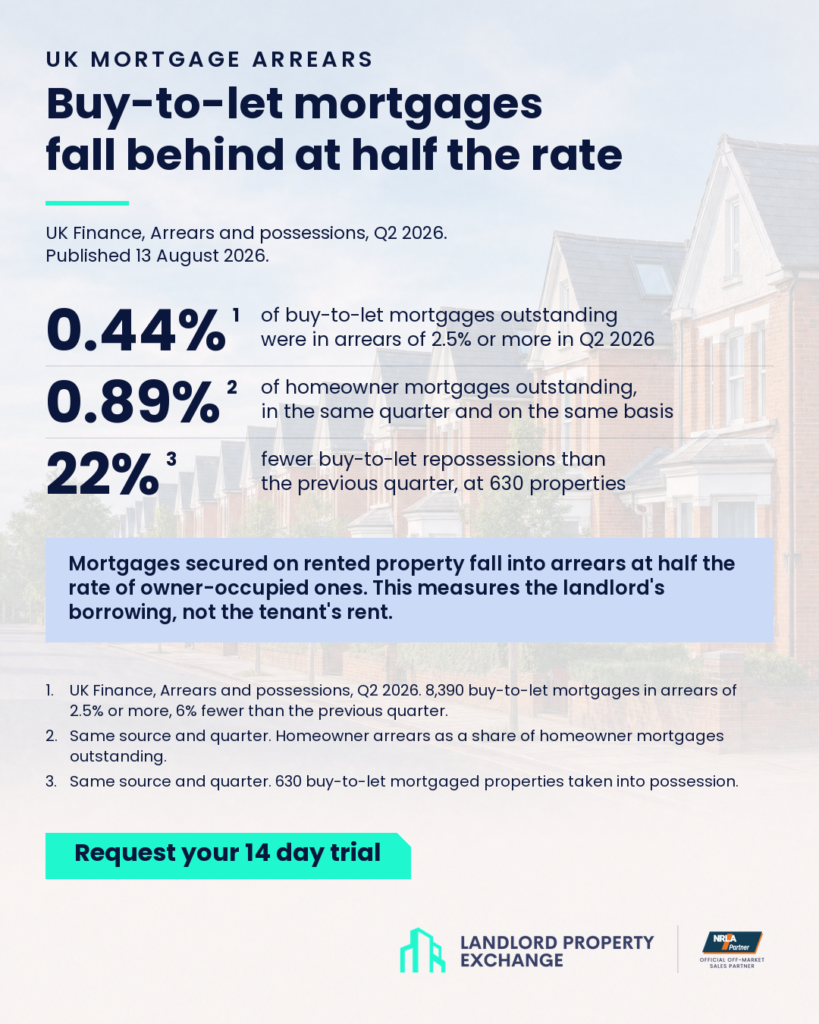
Theme 1: The Landlord Exit Is Real — But It Is Not a Collapse

The most discussed topic of the evening was the ongoing landlord exit from the private rented sector. Official figures, referenced by Ben Beadle of the NRLA, confirm that the number of buy-to-let landlords in England has been declining consistently since the combination of Section 24, higher stamp duty surcharges, and regulatory pressure began to bite.

However, the framing of a “collapse” in the PRS was challenged by several attendees. The exit is real, but it is selective. Highly-mortgaged, single-property landlords are disproportionately represented among those selling. Portfolio landlords — particularly those with lower LTV positions and properties in strong rental markets — are holding, and in some cases acquiring. As one attendee put it:

“The market is bifurcating. The accidental landlords are leaving. The professional investors are expanding.”

For LP Exchange, this dynamic is precisely the market the platform was built for: motivated sellers who need a clean, discreet exit, and professional buyers who see the opportunity clearly.

Theme 2: The Renters' Rights Act Is Creating a Window, Not a Wall

There was broad agreement around the table that the abolition of Section 21 on 1 May 2026 is not, in itself, the catastrophe some commentary has suggested. The challenge lies in the transition — specifically for landlords who have not yet decided how they intend to manage possession going forward.

Mark King, a specialist BTL mortgage broker and regular Evening Exchange contributor, made the point that Ground 1A — the new sale ground — creates a structured incentive for tenanted sales rather than vacant possession sales.

“The maths of evicting to sell has changed fundamentally. Landlords who haven’t done the numbers yet are going to be surprised.”

The NRLA’s position, articulated by Ben Beadle, was that landlords with legitimate exit strategies should be using the platforms and processes that the new regime has been designed around — not trying to apply pre-2026 thinking to post-2026 rules.

Theme 3: Section 24 Remains the Structural Problem

Sabine, a specialist property accountant who has been a consistent voice at the Evening Exchange, offered the view that Section 24 — not the Renters Rights Act — remains the primary driver of landlord exits:

“The RRA gets the headlines. Section 24 does the damage.”

Her analysis: the Renters’ Rights Act changes how landlords exit. Section 24 changes whether they should hold in the first place. For higher-rate taxpayers with mortgaged portfolios, the after-tax returns on some properties have fallen to the point where the capital could work harder elsewhere.

“The question I hear most from clients is not how do I sell,” she said. “It’s whether the property is worth holding at all. Section 24 has changed that calculus for a significant cohort.”

Theme 4: The EPC Cliff Is Closer Than Landlords Think

The 2030 EPC C minimum standard — which will require all tenanted properties to achieve at least a C rating to be legally lettable — is still almost four years away. But Melanie, a surveyor and energy performance specialist, noted that the lead times involved in retrofit work make 2026 the realistic point at which decisions need to be made.

“If you have a D or E-rated property and you’re not sure whether to upgrade or sell, you probably have a twelve-to-eighteen-month window before the decision starts making itself. After that, you’re either spending on upgrades you don’t want to make or trying to sell a property that’s harder to finance.”

The Evening Exchange discussion concluded that the EPC question is, in many cases, a proxy for the sell-or-hold question. For landlords who are already ambivalent about a property, EPC C acts as a forcing function.

Theme 5: Off-Market Is Becoming the Professional Standard

Perhaps the most striking shift in the conversation, compared to previous Evening Exchange discussions, was the normalisation of off-market property transactions among experienced investors.

Three of the investors present at the event confirmed that their most recent acquisitions had been sourced off-market. Two cited LP Exchange directly. The common thread: they were not prepared to compete on Rightmove for properties that carry void risk, require negotiation against retail buyers, and come without tenancy documentation.

“The open market makes sense for owner-occupiers,” one portfolio landlord observed. “For income investors, the off-market tenanted model is structurally superior. I don’t know why it took us so long to formalise it.”

Looking to sell?

What the Experts Agreed On

Despite the varied perspectives in the room, several points of consensus emerged:

  • The combination of Section 24, the Renters’ Rights Act, and EPC requirements has created a multi-year pipeline of motivated sellers. This is not a temporary condition.
  • Landlords who have not reviewed their tax and regulatory position in the last 12 months should do so immediately.
  • The off-market tenanted sale model is the most efficient and tenant-responsible route to exit for the majority of selling landlords in the current environment.
  • Professional investors who understand net yield — and can move quickly on well-priced tenanted stock — are well-positioned regardless of the broader market direction.


The next Evening Exchange will be announced on the events section of our website. Register your interest to receive an invitation.

Want to attend the next Evening Exchange?

Register your interest at lpexchange.co.uk — events are limited capacity and invitations are sent to registered buyers and sellers first.

Get in Touch